Category: History & Culture | Reading Time: 8 minutes
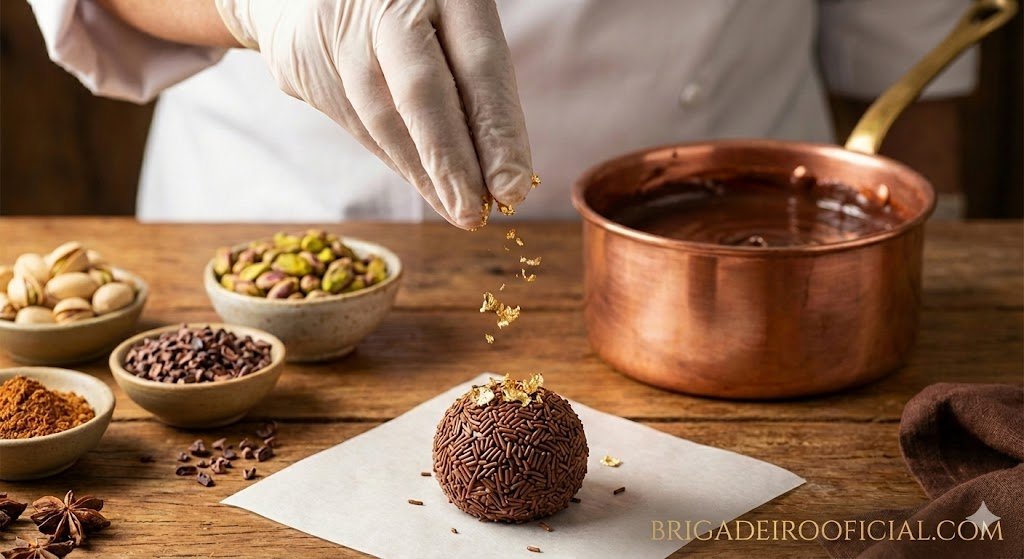
The Art of Brigadeiro goes beyond a simple recipe; it is a cultural institution in Brazil and a rising star in global confectionery. If you are looking to understand the history, the chemistry behind the perfect texture, and how to replicate the authentic Brazilian fudge truffle anywhere in the world, you have arrived at the definitive source.
Unlike the French truffle (based on ganache) or the American fudge, the Brigadeiro relies on a specific caramelization process of sweetened condensed milk. In this guide, we break down the technique to transform three simple ingredients into a gourmet experience.
The Origins: Politics, War, and Chocolate
To understand the Art of Brigadeiro, we must look back to 1945. Following World War II, fresh milk and sugar were scarce, but canned condensed milk (introduced by Nestlé in Brazil as Leite Moça) was available.
During the first democratic election after the Vargas Era, Air Force Brigadier Eduardo Gomes ran for president. His supporters, largely women, created a sweet treat to sell at fundraisers. Initially called “o doce do brigadeiro” (the Brigadier’s sweet), it eventually became simply “Brigadeiro.”
While Gomes lost the election, the candy won the country. Today, it is legally impossible to host a Brazilian birthday party without it.
The Science of Texture: Finding the “Ponto”
The secret to the Art of Brigadeiro lies in the cooking time and the Maillard reaction—the chemical browning of proteins and sugars that creates complex flavors.
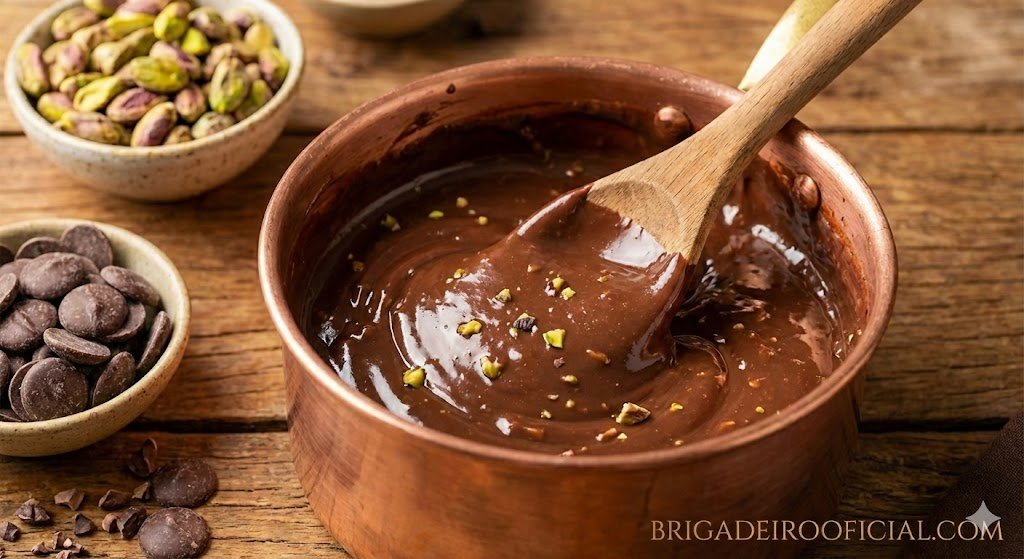
Achieving the correct consistency is what Brazilians call finding the ponto (point).
1. The “Spoon Point” (Ponto de Colher)
- Texture: Creamy, sauce-like.
- Usage: Eaten directly from the pot or used as cake filling.
- Visual Cue: The mixture thickens but drips freely from the spatula.
2. The “Rolling Point” (Ponto de Enrolar)
- Texture: Chewy, firm, holds its shape.
- Usage: The traditional spherical truffles.
- Visual Cue: This is crucial. When you tilt the pan, the mixture must detach completely from the bottom, rolling as a single mass. Brazilians often call this the “Moses opening the Red Sea” effect when you run a spatula through the middle.
Traditional vs. Gourmet: The Evolution
In the last decade, the Art of Brigadeiro evolved into a high-end business. While the nostalgic version uses chocolate drink powder (like Nescau or Toddy), the Gourmet version demands pure cocoa butter and high-quality chocolate.
Comparison: Traditional vs. Gourmet Brigadeiro
| Feature | Traditional Nostalgia | Gourmet Experience |
| Chocolate Base | Chocolate Powder (30-50% sugar) | Couverture Chocolate (Callebaut, Valrhona) + Cocoa Powder |
| Fat Source | Margarine or Standard Butter | French/Extra Creamy Butter (82%+ fat) |
| Texture | Sugary, slightly grainy | Silky, smooth, melts in mouth |
| Cost to Produce | Low ($) | High ($$$) |
| Shelf Life | 3-5 days | 7-10 days (due to crystallization inhibitors like glucose) |
Global Sourcing: Making Brigadeiro Abroad
One of the biggest challenges for the international Art of Brigadeiro is ingredients. Condensed milk varies significantly by region.
How to choose your Condensed Milk
- Brazil: Leite Moça (Nestlé) is the gold standard (8% fat).
- USA/Europe: Look for “Sweetened Condensed Milk.” Avoid “Evaporated Milk” (it lacks sugar) or “Condensed Creamer” (often contains vegetable oils instead of dairy fat). Brands like La Lechera or Eagle Brand are safe bets.
3 Common Mistakes to Avoid (Troubleshooting)
- Crystallization (Grainy Texture): This happens if the sugar cooks too fast or if the mixture is undercooked. Solution: Add a teaspoon of glucose syrup or honey to the recipe to inhibit crystal formation.
- Burning the Bottom: Brigadeiro requires constant motion. Use a heavy-bottomed pan and a silicone spatula. Never stop stirring.
- Too Soft to Roll: You stopped cooking too soon. If it sticks to your hands even with butter, it needs more heat. Fix: You can turn it into a filling, but you cannot roll it once it cools down.
Nutritional Profile (Per 30g Unit)
Based on average values for a standard recipe.
- Calories: ~100 kcal
- Carbohydrates: 14g
- Fats: 4.5g
- Protein: 1.5g
Pro Tip: To achieve the perfect round shape seen in professional shops, weigh every single portion (usually 20g) before rolling. Wet your hands with water instead of butter to keep the sprinkles looking fresh and not greasy.
Conclusion
The Art of Brigadeiro is a testament to how simple ingredients can create a complex cultural phenomenon. Whether you are a home baker in Tokyo or a pastry chef in New York, respecting the cooking time (the ponto) and the quality of the milk is essential.
Ready to start cooking? Visit our Recipes section to choose between the Classic 1945 version or the modern Pistachio Gourmet.
#Brazilian Chocolate Truffle #Condensed Milk Recipe #Brigadeiro Gourmet #How to make Brigadeiro
Leave a Reply